
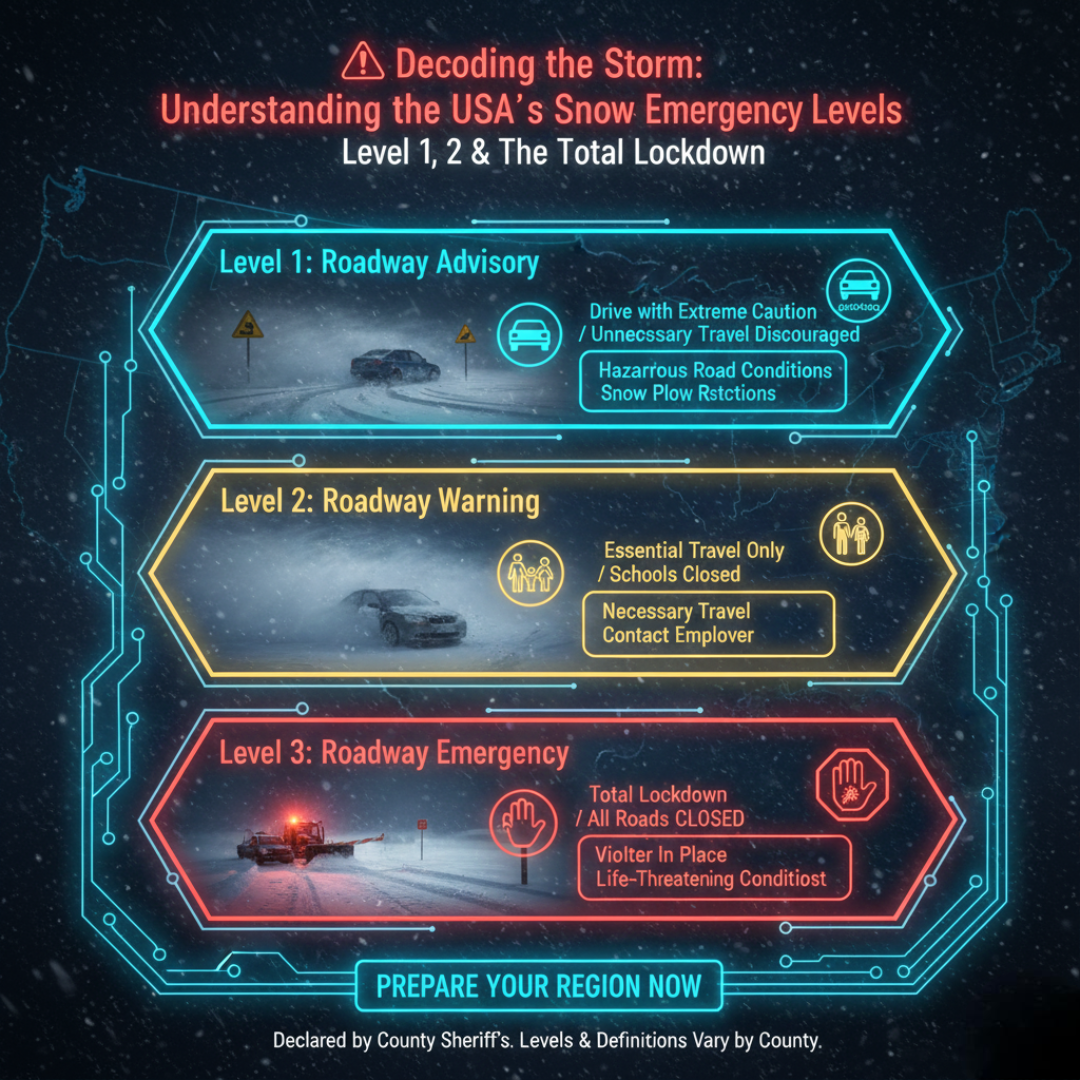
Decoding the Storm: Understanding the USA’s Snow Emergency Levels (Level 1, 2, & The Total Lockdown)
When the flakes start flying and the wind howls, a crucial message flashes across your screen: “Snow Emergency Declared.” But what does Level 1, Level 2, or the dreaded Level 3 actually mean for your daily commute, your job, and your legal right to drive? These advisories are your local government’s ultimate winter safety language. Knowing the difference is the key to surviving the next major US winter storm safely.
In many snow-belt regions of the United States—particularly in states like Ohio, Indiana, and parts of the Northeast—local authorities, usually the County Sheriff’s Department, use a standardized, three-tiered system to communicate road danger during severe winter weather.
This system, often referred to as Snow Emergency Levels, is your direct guide to traffic safety, parking rules, and when you absolutely must stay home. Ignoring these levels can lead to tickets, towing, or even arrest. Let’s break down the essential difference between the Advisory, Warning, and Emergency phases.
The Three Tiers of Snow Emergency
The snow emergency levels escalate based on road conditions, visibility, and the ability of snow plows and first responders to operate safely.
Level 1: Roadway Advisory (Drive with Extreme Caution)
This is the first alert, often declared after sustained snowfall (typically 2–4 inches) or when significant ice forms on the roads.
| What it Means | Your Action Plan | Key SEO Keyword |
| Conditions: Roads are hazardous due to accumulated snow, blowing and drifting snow, and ice. | Drive Cautiously! Slow down, increase following distance, and allow extra time for travel. Unnecessary travel is discouraged. | Road Advisory, Hazardous Road Conditions |
| Parking: In many municipalities, Snow Emergency Parking Restrictions go into effect, requiring vehicles to be moved off designated snow routes to allow plows to clear streets curb-to-curb. | Snow Plow Routes: Check local signage and move cars immediately to avoid fines or being towed. | Parking Restrictions, Snow Plows |
Level 2: Roadway Warning (Essential Travel Only)
This level signals that conditions are seriously dangerous, often occurring after 4–8 inches of snowfall with high winds and poor visibility.
| What it Means | Your Action Plan | Key SEO Keyword |
| Conditions: Roadways are extremely hazardous due to heavy snow accumulation, low visibility, and very icy patches. | Stay Home if Possible. Only those who feel it is absolutely necessary to drive should be on the roadways. | Necessary Travel, Hazardous Driving |
| Work/School: Schools are generally closed. Employees must contact their employer to determine if they are required to report to work. | Employer Policy: Do not assume. Communicate clearly with your manager about your ability to travel safely. | Business Closures, Telecommuting |
Level 3: Roadway Emergency (Total Lockdown)
This is the highest, most severe level. It is typically reserved for extreme storms (8–14+ inches of snow), near Blizzard Warnings, or whiteout conditions where emergency services can no longer safely operate.
| What it Means | Your Action Plan | Key SEO Keyword | |
| Conditions: All roadways (County, State, and Municipal) are officially CLOSED to the general public. Conditions are considered life-threatening. | DO NOT DRIVE. Only police, fire, medical, and other non-emergency personnel vehicles are permitted on the road. | Road Closures, Life Threatening Conditions | |
| Consequences: Violators May Be Subject to Arrest. Driving on the roadways for non-essential reasons can result in fines and legal penalties. | Shelter in Place: Stay indoors, check on neighbors, and do not attempt to travel until the Level 3 declaration is lifted. | Shelter In Place, Extreme Winter Storm |
The Crucial Takeaway: Localized Authority
It’s vital to remember that these Snow Emergency Levels are usually declared by County Sheriffs, not the National Weather Service (NWS).
- Varies by County: The exact definitions and the amount of snow needed to trigger each level can vary slightly from one county to the next. Always check the Sheriff’s office website or local news for the official definition in your jurisdiction.
- The NWS Warns, The Sheriff Declares: The NWS issues advisories (like Winter Storm Warnings or Blizzard Warnings), but the local sheriff uses those warnings, combined with actual on-the-ground road conditions, to declare the official emergency levels that impact travel laws.
Next time the forecast turns white, pay attention to those three little numbers. Your personal safety and the smooth operation of first responders depend on it!
Which Snow Emergency Level causes you the most anxiety? Share your worst winter driving story below!
Leave a Reply